


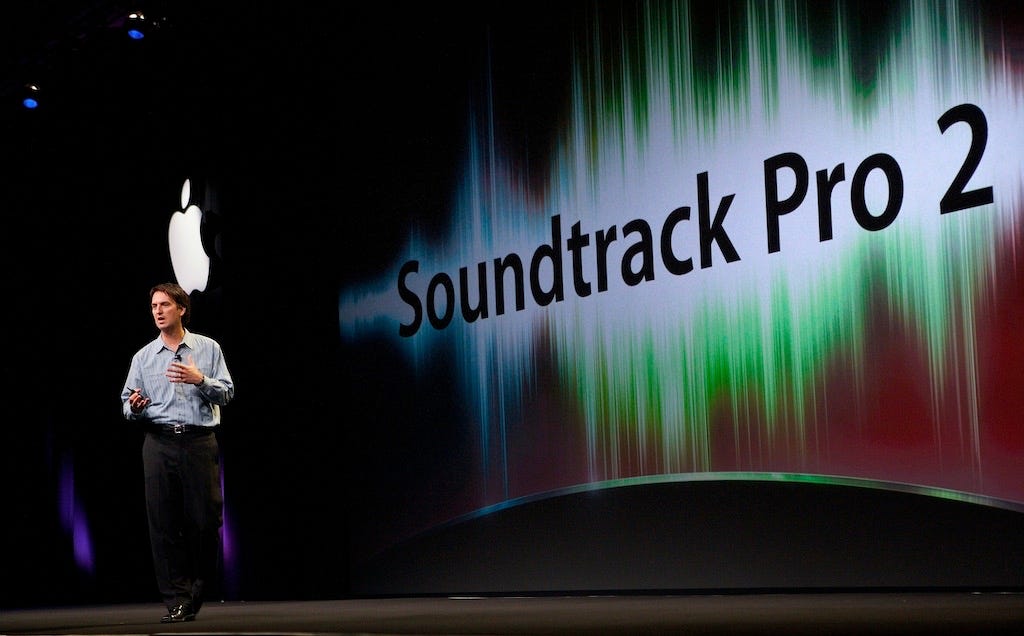
In April 2005, Steve Jobs decided he didn’t want to do the keynote at NAB.
NAB is the National Association of Broadcasters, one of the biggest events in the professional media industry. Apple held a two-hour presentation for over 2,500 customers and the press about Final Cut Pro and our professional video products. Steve’s interests had shifted almost entirely to the consumer side by then. iPod was eating the world. He had bigger things on his mind.
So he handed it to me.
My colleagues from other parts of the company were, to put it gently, mortified. Steve trusting me with a two-hour Apple keynote was not how they would have scripted things. But it wasn’t their call. Nor was it mine, if you know what I mean. The room looked at me the way you look at someone who’s just been handed something a little dangerous.
But I knew how to do one of these. I’d supported Steve through his keynotes at Macworld over the past few years. I’d watched how he built a presentation from the inside. How every word and demo was rehearsed until the spontaneity was real. How the story mattered more than the specs. I’d internalized all of it.
We rehearsed for days. Demo run-throughs, over and over. Strategic partners coached on their roles. Every kink ironed out, every transition timed, every contingency mapped. We had backups for the backups. My team had worked incredibly hard, and they were ready.
It was the morning of the actual event. I was backstage, still running through things in my head, when one of the event coordinators pulled me aside.
She politely asked permission to tell me something I didn’t expect.
“Your team has done an incredible job. They’re ready. You know the pitch cold. You’re at the point of diminishing returns. Step away. Clear your head and come back ready to have some fun. You got this.”
I almost argued with her. I had more prep to do. There were slides I wanted to review one more time. A demo sequence I wasn’t totally comfortable with.
But she was right, and somewhere underneath the adrenaline, I knew it.
So I put on my Bose noise-canceling headphones, fired up “Lose Yourself” on my iPod, and went for a walk.
I don’t remember where I walked. Somewhere to escape the overstimulation for which Vegas is famous, I’m sure. But I remember what it felt like. The preparation fell away, and something else showed up. Not confidence exactly. More like presence. I stopped performing the keynote in my head and just let myself be the person who was about to give it.
I came back, and my team killed it. Two hours. Two thousand people. Standing ovation.
I’ve listened to “Lose Yourself” before every major presentation since. For almost twenty years now, it’s been my walk-up song.
But the lesson wasn’t the song. It was what the coordinator understood about the relationship between preparation and presence.
She had watched hundreds of presenters do exactly what I was doing. Over-rehearse past the point of usefulness. Optimize until the life drains out. Get so deep into the mechanics that they forget they’re a person walking onto a stage to talk to other people.
Her advice was not a productivity hack. It wasn’t a technique. It was the opposite. It was permission to stop optimizing and start being the person who already knew what he wanted to say.
The best advice I’ve ever received in a professional setting had nothing to do with the work. It had to do with me.
I think about that a lot lately.
A few months ago, Liz and I were in the Daintree Rainforest in Far North Queensland. Our guide, Rick, showed up in full Steve Irwin gear with a snorkel-equipped SUV. Straight from central casting. The kind of guy who corrects you when you say “bugs” — “Insects, not bugs” — and teaches you phrases like “dry as a dead dingo’s donger in the desert.” Duly noted.
We’d spent the morning on a slow cruise up the Daintree River spotting crocodiles, then hiked a protected pathway through rainforest and mangroves while Rick narrated like the seasoned naturalist he is. Every vine had its story. Every sound had a source. He’d been doing this for years, and you could feel it. The man knew this place the way you know your own house in the dark.
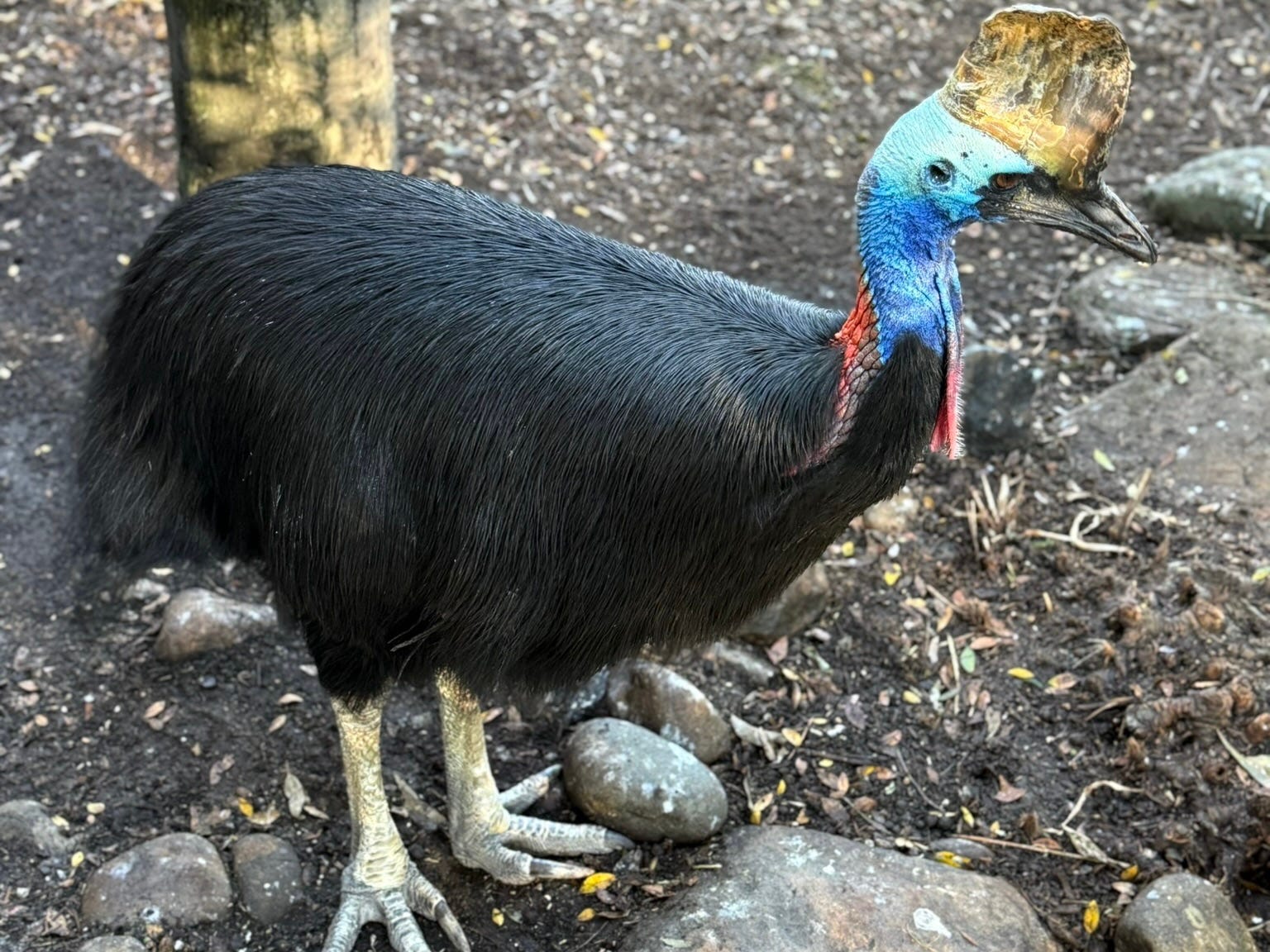
Between stops, Rick told us about the cassowary. If you’ve never seen one, imagine an ostrich redesigned by someone who had only dinosaurs for reference. Massive. Prehistoric-looking. A bony crest on top of its head like a helmet. Feet that could open you up without much effort. He explained, with genuine reverence, that these were among the most dangerous birds on earth and increasingly rare. Maybe four thousand are left in the wild.
Interesting. Noted. We moved on.
Later, we were driving along a road through dense rainforest when Rick slammed on the brakes.
A cassowary was crossing the road. With two little chicks.
What happened next is the part I keep coming back to.
Rick, this seasoned professional, this man who has spent his adult life in the Australian bush and has almost certainly seen more wildlife than most zoologists, completely lost it.
He was swearing in the most colorful Aussie vernacular I’d ever heard. He was whispering and shouting at the same time, which I didn’t think was physically possible. His hands were shaking. He grabbed our arms like a kid pulling his parents toward the toy aisle. Before we knew it, we were closer than we probably should have been.
This was not a man performing excitement. This was a man who understood exactly what he was seeing, knew how rare it was, and was completely, involuntarily undone by it.
His expertise didn’t make him cool about it. It made the moment bigger. He knew what we were looking at in a way we never could. And that knowledge didn’t create distance. It dissolved whatever distance was left.
I watched him watching that cassowary cross the road with her chicks, and I thought: that’s what it looks like when someone is fully in it. When knowing more makes you feel more, not less.
Liz and I stood there, quiet, and let the moment be what it was.
No one reached for a phone. For a few seconds, anyway.
We tend to assume that expertise makes you calm. That the more you know, the less you feel. That professionalism means composure.
Rick blew that up in about fifteen seconds.
He’d spent his whole life learning this world. And when the rarest version of it walked across the road in front of him, all that knowledge didn’t make him composed. It made him a little kid again. The knowing made the feeling bigger, not smaller.
I think that’s what presence actually is. Not the absence of preparation or expertise. The moment when all of it falls away, and you’re just there, responding to what’s actually in front of you.
A coordinator backstage knew that. A naturalist on a dirt road proved it.
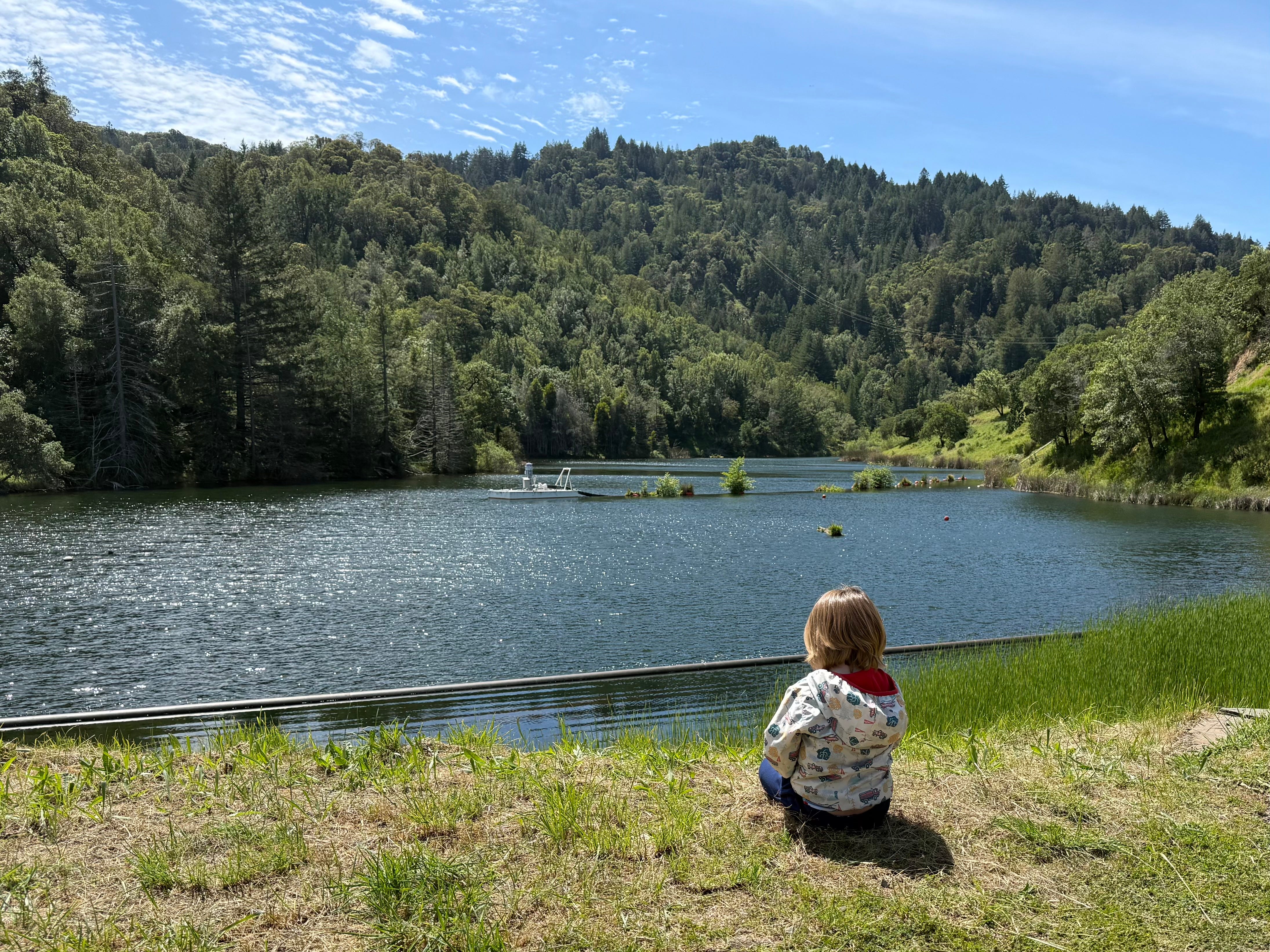
A few weeks ago, Liz and I took my three-year-old grandson Jack on a hike in Mill Valley.
I’ll be honest. I found the trail with AI. Searched for something kid-friendly, not too long, interesting enough to hold a three-year-old’s attention. The tool did exactly what it’s supposed to do. Found a great one.
But once we were out there, it was just Nana, Jack, and me.
We walked slowly, which is the only speed available when your hiking partner is three. He spotted a baby rattlesnake. He grabbed my phone and took its picture. (That took a minute.) We showed him how to read the trail signs. What to look for. What each symbol meant. He took this task rather seriously, the way three-year-olds take things seriously, as if the entire world depended on getting this one thing right.
We pointed out birds. We talked about the trees. We stopped at a creek and threw rocks and sticks into it for a while, because that’s what creeks are for when you’re three.
Nothing remarkable happened by modern standards. That’s the point.
The other day, his parents sent us a video.
Jack is back on the same trail. With them this time. And he’s showing them the exact same things we showed him. Reading the signs. Pointing out what to notice. Teaching them, in the bossy, delighted way that only a three-year-old can, what he had learned.
He didn’t just remember it. He owned it. He was the expert.
I watched that video more times than I’d like to admit.
I’ve been writing for four weeks about what AI is quietly changing. I meant every word.
But I hadn’t written about the thing I’m actually trying to protect.
It’s not an idea. It’s a moment. The one where the tools have done their job and there’s nothing left but you and whatever is actually in front of you.
That moment is available every day. We just keep scrolling past it.
Stay stubborn.
There’s a thing in high-performance athletes (I know, something you associate with me, amirite?) where there is a upwards curving line indicating the ramp up before an event. It goes up and up, until just 2-3 minutes before the event, then it drops off a cliff. You get more and more hyped, and then… just let it go, drop the pulse, breathe… you’re ready.
Rob - I am really enjoying reconnecting with you through these posts. Most excellent and I am sharing with others. As a mom of 3 who lured kids outside and into nature-- and whose ADHAD brain always needs new practices to stay present-- this one seems like the most important. My takeaway - Keep the technology in check, really in check, and then be human.