

I told Liz on the flight to Grand Junction that I wanted to live more spontaneously.
Book a flight. Land somewhere. See what happens.
She found this more than a little funny, coming from me. After all, I bring project management discipline to taking out the garbage.
I pressed on. “In 1993, we did exactly that. We flew to Greece with no plan. We ended up on Santorini. Walked the island reading hand-lettered for-rent signs in shop windows. Found a little house on a cliff for twenty bucks a night.”
She said, “But that’s not possible anymore.”
She didn’t seem sad about it. More like she was correcting the record.
“Everyone’s online now. Airbnb made it too easy.”
We both went back to listening to whatever Spotify and Audible had cached for us before we lost cell coverage.
I kept thinking about that cliff house. Amstel Light for breakfast. Getting lost. Dinner in a cave. How we calculated how many days, weeks, and months we could survive in Greece on forty dollars a day.
We loved our little hut.
It wasn’t fancy. A simple little place carved into the hillside. The kind of place you found because you wandered into town at the right hour, looked in the right window, and spoke to the right person.
It existed in that little space between “It’s getting dark, and we really need a place to stay” and “Oh my God, this is perfect.”
That gap used to be part of travel. Maybe part of life. Now the gap gets filled before you even know it was there.
I turned sixty a week ago.
Liz has planned my birthdays for thirty-three years. Always good. Usually surprising. Sometimes improbably good. Hot air balloons. Helicopter rides. Amazing meals.
She has a gift for making people feel considered, which is beautiful unless you are the person who has been doing the considering for three decades.
It is a lot of work, and this year she hit the wall. Two months before my birthday, she told me she couldn’t do it.
Past successes had become a ledger she couldn’t keep up with. Every good birthday had turned into evidence against the next one.
So I took it over. I planned the weekend down to the half hour. Every meal, every trailhead, every drive time. I did it with Claude. I told it what I had. It told me what to do. I built a spreadsheet.
It was a great plan.
We did almost none of it.
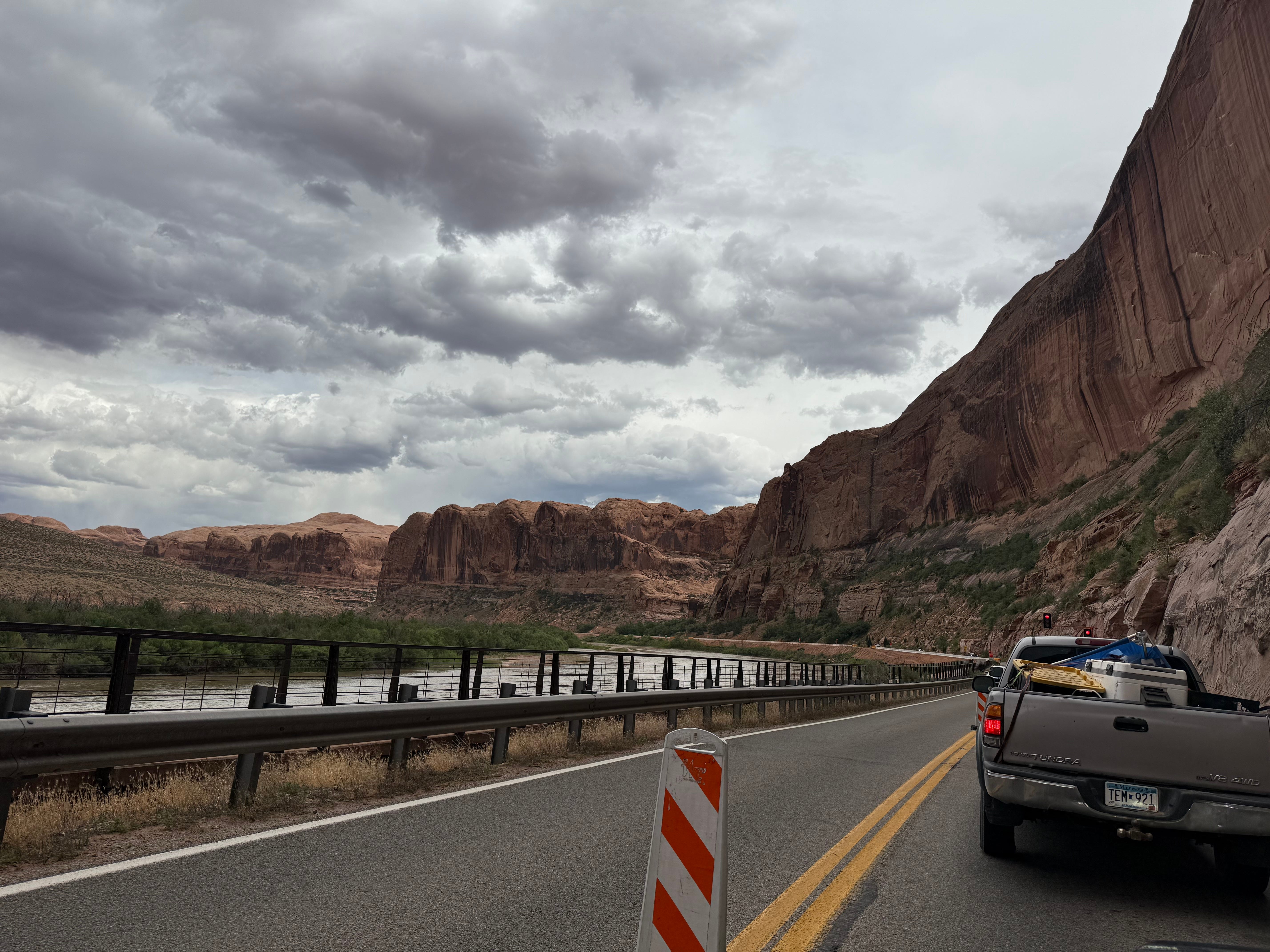
By day three, we were tired of looking at rocks. Moab is mostly rocks. Beautiful rocks. Cinematic rocks. God-had-a-good-week rocks. But rocks. We wanted water.
That evening, in the hotel, I went back to Claude and asked for a river hike. It gave me one. Clean, confident, plausible. Then I stopped by the front desk and asked the woman behind the counter. She knew her stuff. She had hiked the canyon several times. She told me where the AI was wrong. Where the water level would matter. Which fork to take. Where people got turned around. What the trail description made sound obvious that was not obvious once you were standing there.
The kind of thing you only know from your boots being wet.
We went the next morning.
Two miles in, Liz almost passed out.
In retrospect, it was probably the altitude, the desert, not enough water, a bean-and-cheese quesadilla that had arrived much too recently, and a canyon hike that turned out to be less “easy” and much wetter than Claude had described.
At the time, it was just scary. A sudden narrowing of her vision. A few stars as her eyes flickered and her knees wobbled. Far too close to a forty-foot cliff for my liking.
We hadn't had real cell coverage in two days. We certainly didn't have it now. She sat on a flat rock, put her head between her knees, and asked very calmly for water. I gave her water. She said, “More.” I gave her more. Every drop I had, which was not enough.
She blamed the burrito. Repeatedly.
In that moment, I chose not to point out that it had been a quesadilla. I also chose not to suggest altitude, dehydration, or desert heat.
This was hard for me. But now was not the time to be right.
Then she asked, “Did I pass out?”
It was a funny question. You’d think you’d know. But she was out of it.
The woman at the front desk had not told me about that. Neither had Claude.
So we sat. For forty minutes, we sat on a rock in a canyon with no signal while my wife slowly came back into herself. We had the same two-and-a-half miles to unwind on the way back.
I watched a hawk work the thermals above us. I tried to remember the last time I had sat still that long without choosing to make it useful. Without checking something. Without converting the moment into a task. The hawk circled out of sight. Bighorn sheep were up on the rocks somewhere. Liz drank more water. That was all that mattered in the moment. Well, that and keeping her away from the ledge. Turns out I have a fear of heights by proxy. I’m okay until I fear someone I love slipping over the edge. In that moment, I was not okay.
Eventually, she said she could stand. We walked out slowly.
Took a lot of breaks.
That night was the dinner. Sixty years. Liz had survived the canyon. The spreadsheet had not.
Utah has strange liquor laws. You cannot get a normal drink in a Utah restaurant without performing a small ritual involving the words “with food.” So before dinner, we walked into a wine bar because it was easier than negotiating with the state.
There was a young couple at the next table. They were drinking nervously and talking quickly. The woman kept looking at her hand. They had gotten engaged that morning. At Delicate Arch at 5:30 a.m. On a rock. They told us the whole thing. He had practiced. She didn’t see it coming. They were still inside the event, still repeating the details to make it real.
Liz and I told them about Greece in 1993.
Liz looked at me. “Tell them about Tahoe,” she said.
When we eloped in Tahoe, an older couple at the next table at breakfast asked us how long we had been married. We said, “About an hour.” They handed us two rolls of quarters. “You’ll need these for the casino,” they said.
The quarters lasted about five minutes. We have been telling the story for thirty-three years.
On the way out of the wine bar, we paid for the engaged couple’s wine. We told them the tradition was now theirs to pass on.
“Happily,” they said as our new friends hugged us goodbye.
We forgot to get their names. That wasn’t the point.
For most of the trip, our phones did almost nothing. No bars. No notifications. No little red dots. No urgent invitations to care about things I did not care about five seconds earlier. They sat in our pockets, dead-weighted and quiet. Useful for one thing.
I took more pictures that week than I had in years. And I realized something that embarrassed me a little. I love the camera. More than every other function on the phone combined.
Not the maps. Not the messages. Not the email. Not the prompts, suggestions, alerts, confirmations, reminders, and tiny algorithmic nudges.
Just the camera. The part that captures what’s in front of me when I decide to look.
In Moab, the phone became a tool again. That felt ancient.
On Monday, we drove back through the desert. Liz had recovered. The spreadsheet was a memory. The plan had become comic evidence of who I become when I try to manufacture spontaneity with a large language model.
I thought about what I would actually remember. The wine bar couple. The hawk. Liz on the rock. The bartender's promise. The useless phone in my pocket. The strange relief of being unreachable.
The cliff house in Santorini cost twenty bucks because nobody could find it online. The signs were paper. The owner was in town. The decision required walking, asking, guessing, risking, and being there.
Airbnb did not just make that easier. It made that kind of encounter nearly impossible.
The things worth remembering still happen.
But they tend to happen where the smoothing has not reached.
A canyon with no signal.
A liquor law dumb enough to create a detour.
A woman at the front desk who knew the canyon from walking it.
A hawk over a flat rock.
A gift that took thirty-three years to pass on.
Liz turned to me as we crossed back into Colorado.
“That was a good birthday,” she said.
It was.
Not because the plan worked. Because enough of it failed.